LogMeIn / Jive Communications · 2014–2021
Turning Around the Most Important Product to a $4 Billion Company
The product had been reset twice — new codebases, new teams, new engineers each time. Competitors were years ahead. I was handed the work nobody had been able to finish.
Six years later, GoToConnect became the stated future of the company. The work I led was critical in LogMeIn's decision to acquire Jive Communications — and I ended up leading design across the most important product to a $4+ billion dollar company.
30-second read
What matters in this case
- The challenge
- The company’s strategic communications product had been reset twice while competitors continued to move ahead.
- My contribution
- I built research capacity, led the design team through new codebases and teams, and helped unify GoToConnect with GoToMeeting.
- The result
- The team created or substantially improved four products across web, mobile, admin, call-center, and conference-room experiences.
- Pivotal decision
- We used deliberately low-fidelity prototypes to align on workflows before investing in another expensive implementation direction.
- 2 resets
- New codebases and teams navigated
- 4 products
- Created or substantially improved under design leadership
“Too hard to do business with”
Partners churning, blaming the software
“Channel Partners love selling us”
The exact phrase partners started using
The Situation I Walked Into
JiveWeb — the product that would eventually become GoToConnect — had been rebuilt from scratch twice. New codebases. New designers. New engineers. Each time, the product stalled before it could ship.
Competitors like RingCentral had years of head start. The team had lived through two failed attempts and carried the weight of that history. Trust in the product — and in design — had to be rebuilt from the ground up.
Reset twice
Two complete restarts — new codebase, new team, new approach each time. The product hadn't shipped meaningful work, and morale reflected it.
Competitors years ahead
Unified communications was a crowded space. RingCentral and others had shipped, iterated, and refined. We were catching up from behind.
Two product lines
GoToConnect and GoToMeetings operated separately — different teams, different patterns, different design languages. The market expected one experience.
The inventory
What two resets actually leave behind
Every number below was true the week I took over. Select a tile to see what I changed.
Building the Research Infrastructure
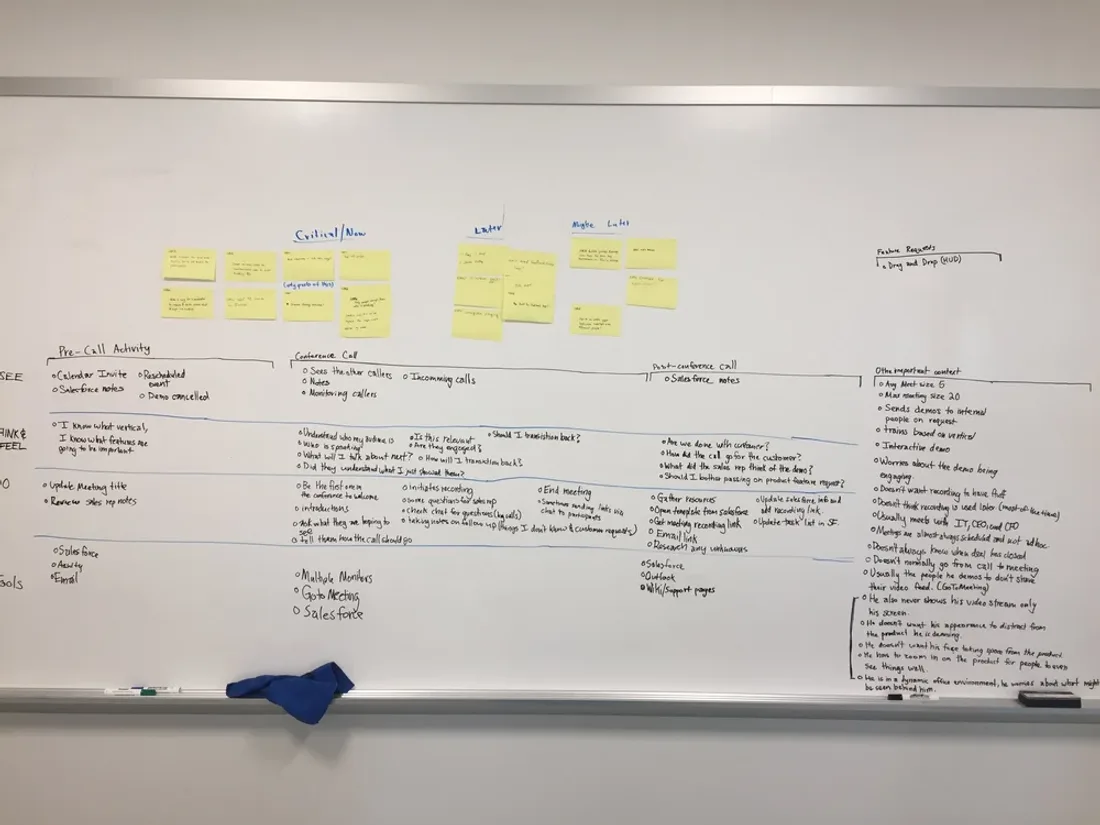
Before I could design the right thing, I needed to understand the problem — and give the whole team the means to keep learning. I built the research infrastructure from scratch.
Understanding the competitive landscape
- Attended competitor conferences Went where the products were sold — handled the tools, talked to users, asked about roadmaps
- Catalogued competitor products Support sites, feature requests, user reviews — systematic capture of what competitors were doing right
- Tracked real user conversations Twitter, Reddit, forums — reading what people actually said when they weren't being interviewed
Building a learning system
- Implemented session recording (GetJaco) Watched real user sessions — searched events, built funnels, observed behavior without bias
- Stood up analytics and feedback tools Google Analytics for behavior data; UserVoice for feature requests and bug reports — closed the loop from user to roadmap
- Built a customer panel Started a shared doc with users willing to have ongoing relationships — the product org adopted it and it changed how they thought about customers
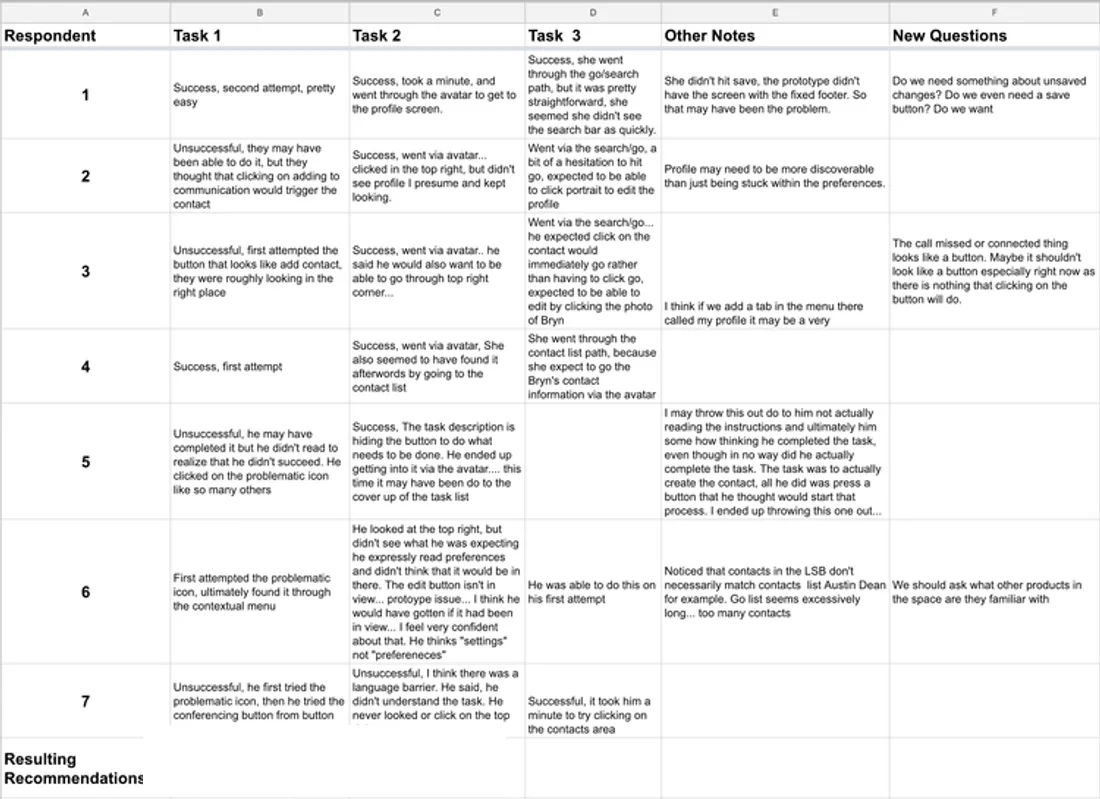
- Ran continuous usability testing (Validately) Moderated and unmoderated tests — rapidly improving flows and catching issues before they shipped
- Get out of the Building Thursdays A standing weekly commitment to talk with real customers — sometimes at their workplaces, often by cold-calling them. The cold calls worked better than you'd think.
What I found
Some sessions I watched with specific questions in mind; others just to see what I'd notice. Both kept turning up insights that went straight into the design.
How I Approached the Work
Design wasn't separate from engineering — it was the organizing force that kept everyone moving in the same direction.
Collaborative ideation
Brought engineers and the PM into the design process before a single wireframe was drawn. Discussed technical constraints, scope, and research together. Better ideas — and shared ownership of the outcome.
Low-fidelity first
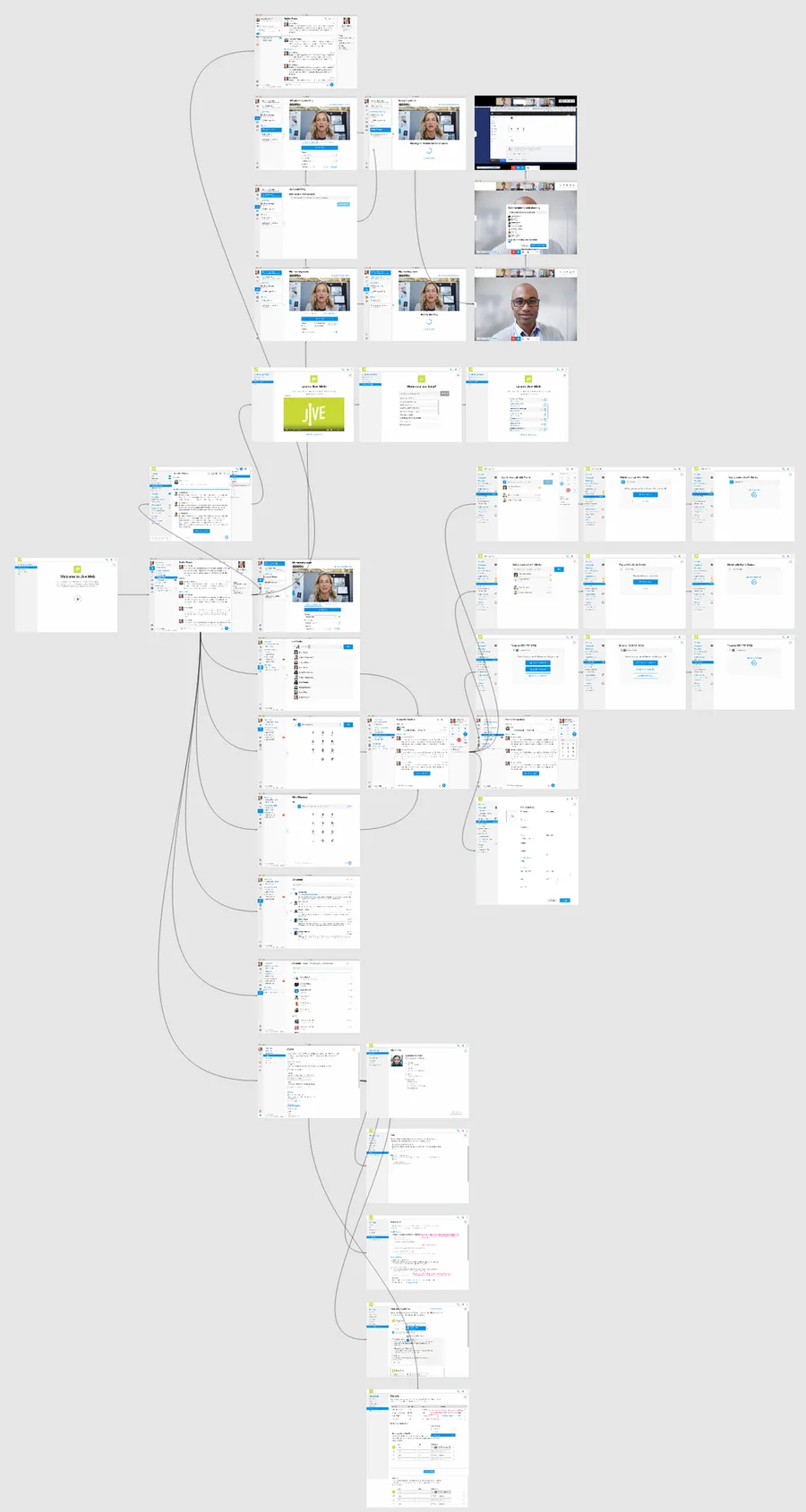
Sketching and rough wireframes before any pixel was polished. Rapid exploration of many directions — the fastest way to stress-test an idea is to draw it badly and see if it holds up.
Purposeful prototyping
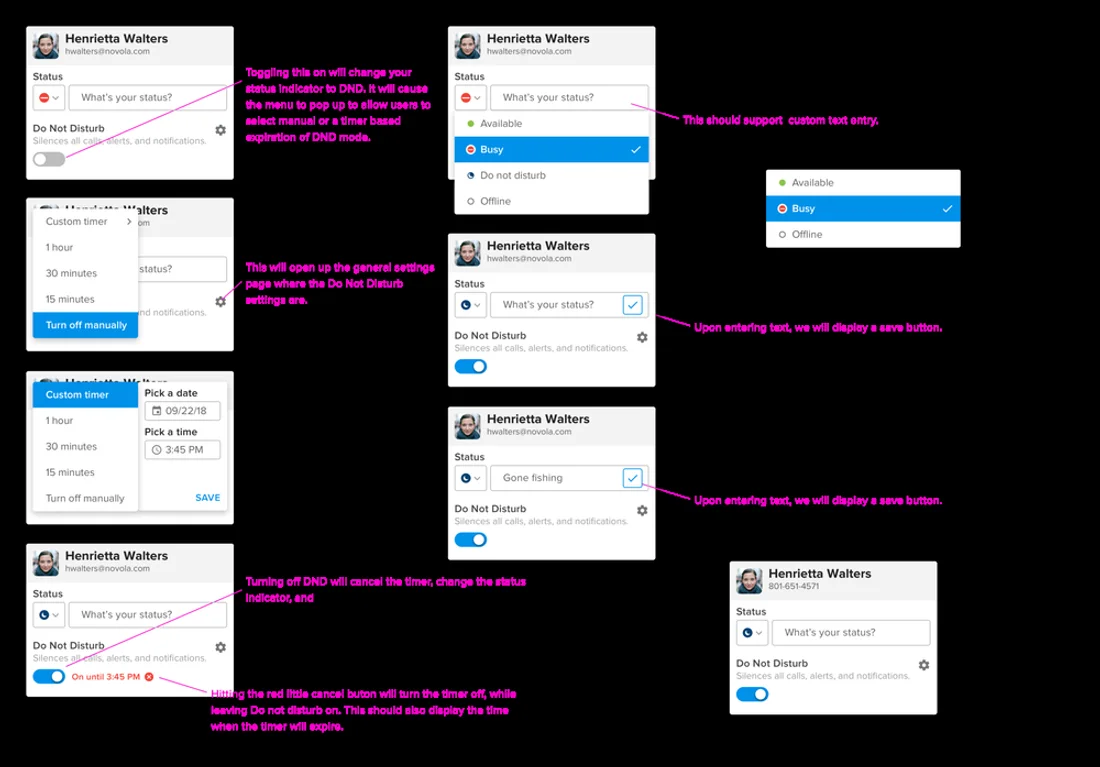
Every prototype had a specific learning goal. Sometimes formal usability tests — other times just getting a sense for how a microinteraction felt. Used whatever tool fit the question: InVision, Atomic, Principle, Framer.
Continuous testing
Tested contact actions, call merge flows, multitasking scenarios, and join-conference experiences. Nomenclature, discoverability, feature presentation — each round of testing surfaced a more intuitive product.
Bringing the Experiences Together
In January 2019, I was asked to lead designers from both the GoToMeetings team and the GoToConnect team to unify their experiences — looks, interaction patterns, and functions.
Two products. Two teams. Two design languages. LogMeIn wanted them to feel like one platform — and they wanted it to feel like GoToConnect. I took on the project management and the design work simultaneously.
We started with an audit — a decision board mapping the differences between the two products, prioritizing what to harmonize first. Then we built toward a shared design system, one that would eventually extend to GoToWebinar and LastPass as well.
Five teams, five systems. No shared customer view—and little understanding of one another’s work.
- Sales
- expectations
- Support
- pain points
- Engineering
- constraints
- Billing
- obligations
- Product
- decisions
- More empathy
- Cleaner handoffs
- One experience
One cross-functional team, sharing context around the same customer journey.
Unified meeting experience
GoToConnect and GoToMeetings' in-meeting and pre-join screens harmonized to shared patterns — the same look, the same interactions, the same expectations.
Shaped next-gen GoToMeeting
The harmonization work gave me a non-trivial role in the direction of the next generation of GoToMeeting — a product used by millions.
Portfolio-wide design system
Part of a small group shaping the company's design system — work that trickled down to GoToMeetings, GoToWebinar, and LastPass.
"The top executives at LogMeIn have expressed that the future of the company is GoToConnect — which means the company's future rides on me and my team's ability to execute."
What Shipped
The product that came out the other side — one design language across browser, macOS, Windows, iOS, and Android.
The same call, the same patterns, on whichever screen the customer picked up first.
Calls, channels, and history in one place — the harmonized language in production.
The Outcome
From product reset twice to the strategic future of a $4 billion company
The first three years cost two engineering teams and two design leaders. Nothing on this chart moves until the practice underneath it changed.
Acquisition signal
The product's trajectory under my design leadership — then called JiveWeb — was critical in attracting LogMeIn to acquire Jive Communications for $342 million. It became GoToConnect after the acquisition.
Company's strategic bet
Executives publicly declared GoToConnect the future of the company — and handed the design of that future to me and my team.
Product that shipped
Browser, macOS, and Windows versions. Phone, video, messaging. A product that had failed twice became the company's flagship.
Platform harmonized
Two separate product lines — GoToConnect and GoToMeetings — brought to a unified design system and shared experience.
Design culture built
Research practices, collaborative ideation, user panels — a customer-centered design culture that didn't exist when I arrived.
Team grown and led
Built and led an international team of product designers — mentored people who went on to lead design at other companies.
Beyond the Flagship
JiveWeb was the center of gravity — not the whole job. As Director of UX, I oversaw design across four GoTo products spanning web, mobile, admin, call-center, and conference-room experiences. Each was created or substantially improved under my leadership.
- GoToConnect — web, iOS & Android
- GoToCallCenter
- GoToRoom
- GoToAdmin
GoToRoom
Ten-foot UI: the portfolio, on the conference-room wall
A uniquely challenging surface: one design language driven across TVs, Dolby Voice hardware, signage tablets, and Crestron controllers — screens you operate from across the room.
Accessibility Champions
Together with Meg and Wendy, I helped kick off LogMeIn's Accessibility Champions program — a cross-team network that made accessibility a shared, ongoing practice instead of one team's job.
One design system, portfolio-wide
Part of the small group shaping the company-wide design system — work that reached GoToMeeting, GoToWebinar, and LastPass.
Hiring & promotion councils
Sat on the leadership hiring council interviewing designers org-wide, and the promotion evaluation committee for the broader design organization.
What I Learned
Rebuilding trust is slower than building something new — and more important. A product reset twice leaves nothing technical behind — the codebases were thrown away. What it leaves is a team that's learned not to believe in what they're building.
The research infrastructure mattered as much as the designs. When you set up analytics, session recording, and user panels, you give the whole organization permission to learn — not just the design team. The PM started interviewing. The engineers started asking why. The product got better faster because more people were paying attention to users.
And the harmonization taught me something about leverage: if you build the right design system, one decision propagates across a whole portfolio of products. The work you do in one place ripples outward in ways you can't always see.